

Ghana and Côte d'Ivoire Unite on Cocoa Pricing: What It Means for Global Markets.
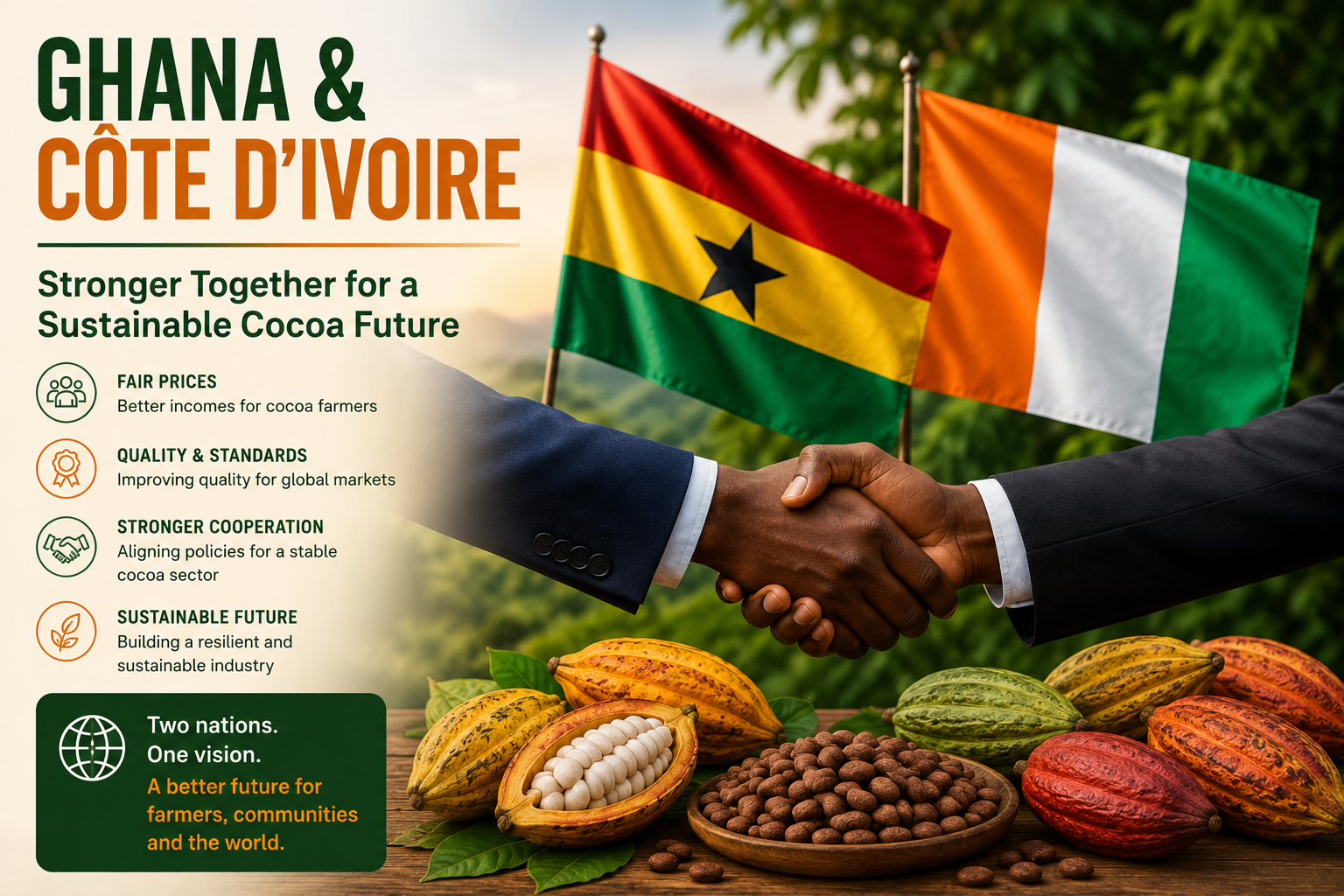
The global cocoa industry may be entering a new chapter.
Recent discussions between the governments of Ghana and Côte d'Ivoire have signalled a renewed commitment to closer cooperation on cocoa pricing, quality standards, farmer welfare, and the fight against cross-border smuggling.
For many outside the industry, this may appear to be a routine policy discussion. However, for farmers, exporters, processors, manufacturers, and international buyers, the implications could be significant.
Together, Ghana and Côte d'Ivoire account for approximately 60% of global cocoa production. As the two largest cocoa-producing nations in the world, decisions made by these countries have a direct influence on supply availability, pricing structures, and long-term market stability.
Why This Matters
Over the past several years, the cocoa sector has experienced extreme volatility.
Weather challenges, crop disease, ageing farms, supply shortages, and rising production costs contributed to a sharp increase in cocoa prices. These market conditions created uncertainty throughout the supply chain, affecting everyone from farmers to multinational chocolate manufacturers.
In response, both countries are seeking to strengthen cooperation and create a more coordinated approach to managing the cocoa sector.
The objective is simple:
To create a healthier, more sustainable cocoa industry that benefits producers while providing greater confidence to international buyers.
A Stronger Focus on Farmer Incomes
One of the key areas of discussion has been improving producer pricing mechanisms.
Historically, cocoa farmers have often received only a small share of the final value generated by cocoa products. Low farm-gate prices can discourage investment in farms, reduce productivity, and create long-term supply risks.
By working together, Ghana and Côte d'Ivoire aim to provide more stable and predictable income opportunities for cocoa farmers.
If successful, this could encourage:
Increased investment in cocoa farms
Improved crop maintenance
Higher yields
Better quality beans
Greater long-term supply security
For the global market, healthier farming communities often lead to healthier supply chains.
Tackling Smuggling and Market Leakage
Another major focus is reducing cocoa smuggling.
Price differences between neighbouring countries can create incentives for illegal cross-border trading. This not only undermines official pricing systems but also creates uncertainty regarding supply volumes and traceability.
A more aligned pricing approach could help reduce these market distortions.
Benefits may include:
Better supply chain transparency
Improved traceability
More accurate production reporting
Greater confidence for international buyers
As regulatory requirements continue to increase globally, particularly regarding sustainability and traceability, this becomes increasingly important.
Quality is becoming more important than ever.
Beyond pricing, both governments have emphasised the importance of maintaining and improving cocoa quality.
This is a significant development.
As global buyers face increasing pressure to meet sustainability, traceability, and quality requirements, sourcing decisions are no longer based solely on price.
Buyers are increasingly seeking suppliers that can provide:
Consistent bean quality
Transparent sourcing practices
Reliable documentation
Sustainable production methods
The renewed focus on quality positions West African cocoa to remain competitive in an evolving global market.
What Does This Mean for Buyers?
For buyers, the immediate impact may be mixed.
In the short term, coordinated pricing efforts could contribute to firmer producer prices and potentially higher sourcing costs.
However, looking beyond the next harvest cycle, there are several potential advantages:
Greater Market Stability
More coordinated policies can help reduce extreme price swings and improve predictability.
Stronger Supply Chains
Better farmer incomes often lead to improved production and more reliable supply.
Improved Quality Standards
A stronger focus on quality benefits manufacturers and ingredient buyers alike.
Enhanced Traceability
As sustainability regulations continue to evolve globally, transparent supply chains are becoming a competitive necessity rather than an option.
What Does This Mean for the Future of Cocoa?
The cocoa industry is facing a period of transformation.
The conversation is no longer simply about producing more cocoa.
The future of the industry will increasingly be shaped by:
Farmer welfare
Sustainability
Quality assurance
Traceability
Supply chain resilience
The cooperation between Ghana and Côte d'Ivoire reflects a broader shift toward building a more sustainable and balanced cocoa market.
While challenges remain, closer collaboration between the world's two largest cocoa-producing nations could provide greater stability for producers, exporters, processors, and buyers alike.
Styyer's Perspective
At Styyer, we believe that the long-term success of the cocoa industry depends on more than pricing alone.
Quality, consistency, transparency, and sustainable sourcing practices will continue to shape purchasing decisions across global markets.
As developments unfold, businesses that stay informed and build strong supplier relationships will be best positioned to navigate market changes and secure reliable supply.
The cocoa market is evolving.
Understanding these changes today will help businesses make better sourcing decisions tomorrow.
Looking to source cocoa products from trusted West African suppliers?
Styyer connects international buyers with reliable sourcing partners for cocoa beans, cocoa powder, cocoa butter, cocoa liquor, cashews, coconut products, and other agricultural commodities.
Contact our team to discuss your sourcing requirements.
📩 sales@styyer.com
